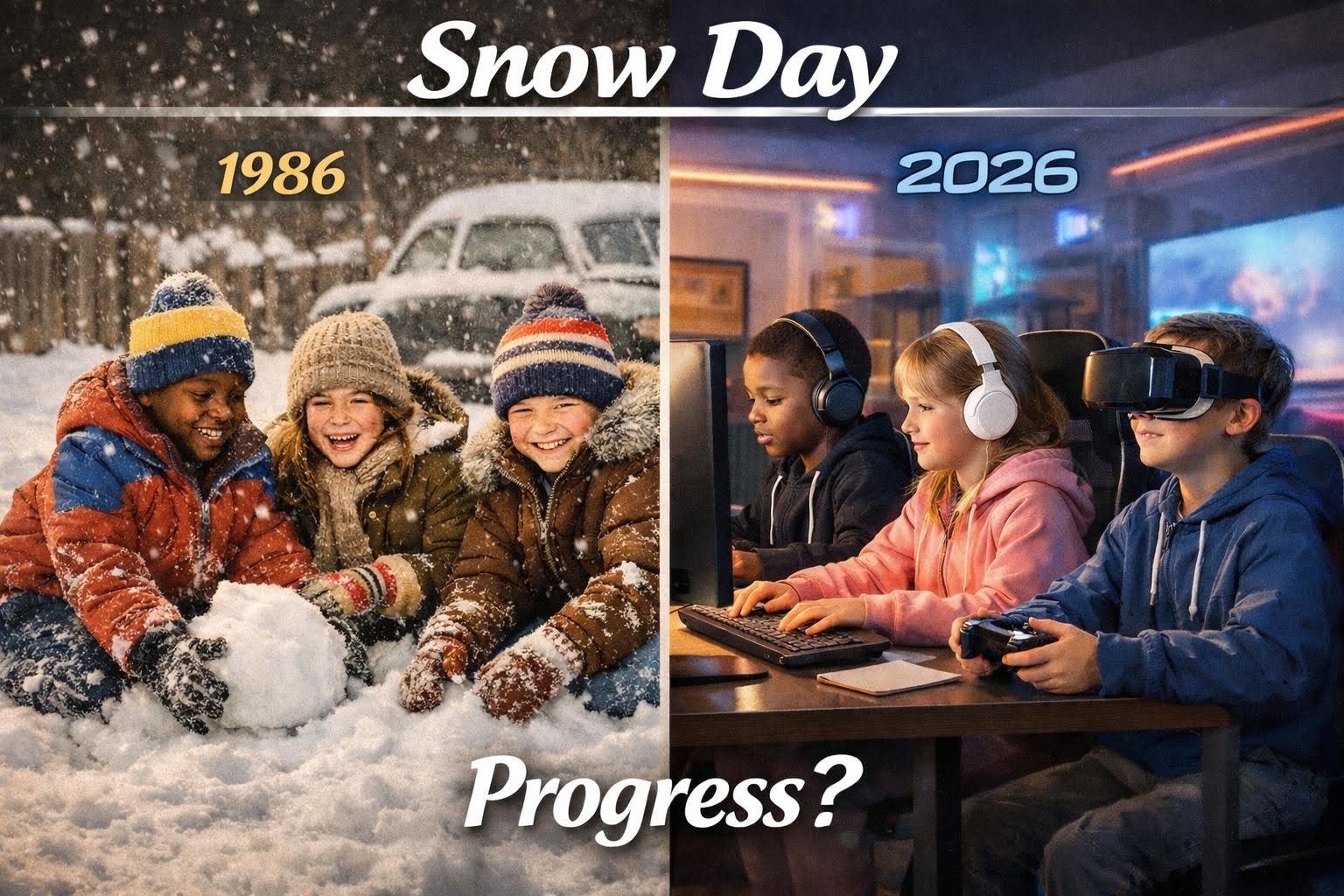

Today was a snow day in New York.
The public schools were closed.
My company supervises preschool teachers.
We were warned on Saturday the schools might close.
We got the word on Sunday that they would.
My team, instead of enjoying their weekend, worked to prepare for remote learning.
They put a plan in place to notify the teachers.
They created spreadsheets to prove the day happened.
They were home, working as hard over the weekend as they do during the week, with no one to say, “Can you believe this.”
The teachers had to prepare lessons.
Practice the technology.
Get familiar with new reporting.
The children had to get up and face computers.
No friends.
No side conversations.
No distractions that usually make school bearable.
We have computers and systems now.
Learning continues.
Everything is documented.
Teachers prepared.
Children waited.
Systems stood ready.
That morning 11.4 inches of snow fell.
No school.
I remember when snow days were the best days because they were nature’s gift to do nothing.
As a child, we couldn’t sleep the night before, waiting to see if school would be canceled.
When we woke up and saw snow everywhere, we rushed outside with boxes, boards, anything that could slide.
We envied the kids with real sleds, but we went anyway.
Anything was fair game.
Everybody benefited.
The whole neighborhood slowed down at the same time.
People talked.
Complained.
Laughed.
Which is why most people show up.
Technology lets us stay connected.
That matters.
But snow days gave us something else.