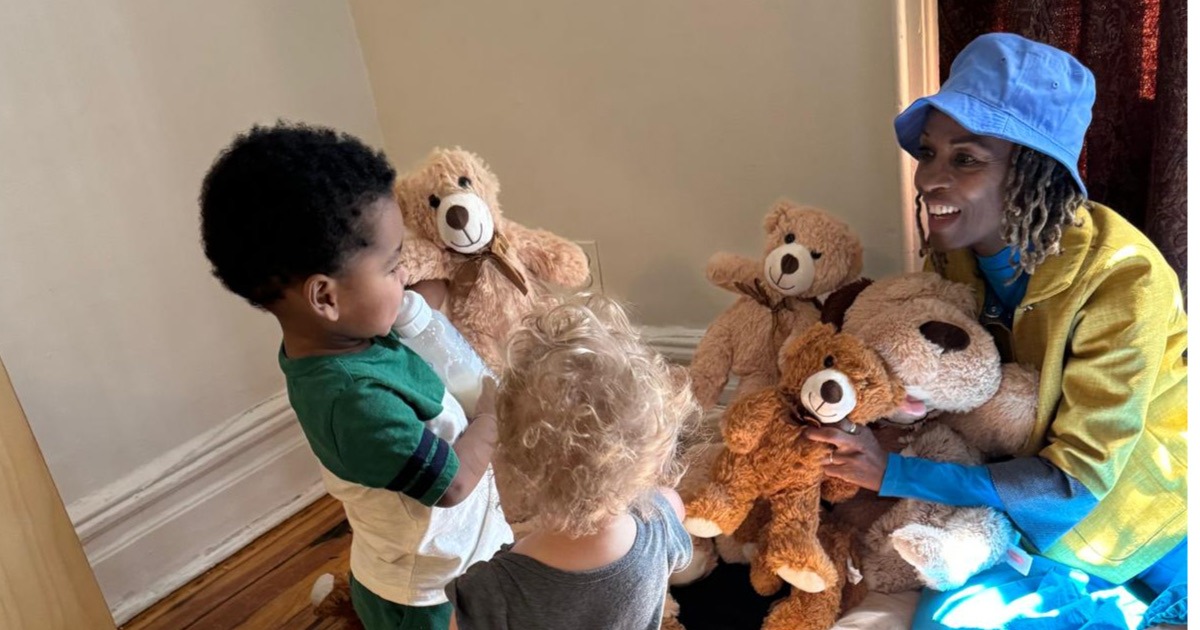

After Mayor Mamdani announced that he would make more child care seats available and improve our system, I made an Instagram post titled Someone Finally Gets It.
In a pink shirt with pink lipstick, I talked about what my 40 years in child care had taught me. That fixing child care is not about adding seats alone. It is about understanding what children need and whether the system around those seats can support the families who use them.
The video reached more people than I expected. There was a lot of engagement.
Much of it was supportive. Likes. Shares.
The comments that stopped me were the negative ones.
People saying they didn’t want their tax dollars paying for someone else’s child care. One comment, especially aggressive, said people shouldn’t have children they can’t afford.
I understand that instinct. I don’t want to waste my tax dollars either. No one wakes up hoping their money disappears into a black hole labeled someone else’s problem.
Publicly funded child care is often framed as paying for someone else’s support.
It supports a workforce that supports all of us.
Child care is not optional. Modern life assumes that someone else will show up to work. We expect nurses in hospitals. Teachers in classrooms. Firefighters on call. Bus drivers on schedule. We expect them there, focused, trained, and reliable.
We don’t spend much time thinking about what makes that possible.
When families have children, someone has to care for them. In the past, that work was often absorbed by extended family, neighbors, or a parent who stayed home. Those structures largely don’t exist anymore. People move to cities like ours to make a living. To pursue opportunity. Because that’s where the jobs are.
And the jobs assume child care already exists.
When child care fails, work fails. Parents miss shifts. Reduce hours. Leave jobs entirely. Businesses feel it. Hospitals feel it. Schools feel it. The economy doesn’t collapse all at once. It shows up tired and understaffed, one missed day at a time.
A report from the Council for a Strong America estimates that the lack of child care costs the U.S. economy $57 billion every year in lost productivity, earnings, and tax revenue. That number reflects the cost of treating care as optional.
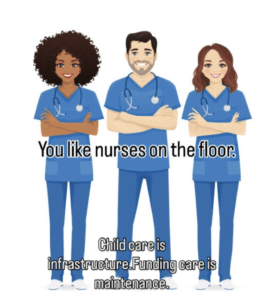
This isn’t generosity. It’s maintenance.
When people say they don’t want to pay for someone else’s child care, I ask this. Do you want a good nurse. A good teacher. A reliable EMT. Because that nurse might not be there if she didn’t have access to care for her own child.
We rely on other people’s labor constantly. We like the labor part. The human part complicates things.
Child care also shapes who gets to stay in the workforce and who gets pushed out. When care is inaccessible or unaffordable, women are more likely to absorb the loss, reducing hours, stalling careers, stepping away entirely. Caregivers themselves, who are largely women, are also underpaid and undervalued, despite doing work that everything else depends on.
And even if you don’t have children, child care still affects you. A stable workforce means better services, stronger businesses, and a healthier local economy. It means hospitals staffed, schools functioning, groceries stocked, restaurants open, buses running. Things you don’t think about until they fail.
If we want our payroll clerks, building inspectors, IT technicians, sanitation workers, delivery drivers, and ourselves to have stable working lives, then investing in child care isn’t charity.
Child care is infrastructure.
It’s common sense.